


A reflection on literature searching skills in India—and whether they truly last without constant reinforcement.
I recently read this blog post by Margaret Gitau that asked a deceptively simple question:
If your NGO disappeared tomorrow… who would truly notice?
Not donors. Not partners. Not regulators.
But the community you exist to serve.
It stayed with me—because when I apply that question to QMed, the answers are not entirely comfortable.
1. Reach Is Not the Same as Impact
Over the years, we have reached thousands of health sciences students and professionals across India. But meaningful learning—the kind that actually changes practice—has likely happened in a much smaller fraction.
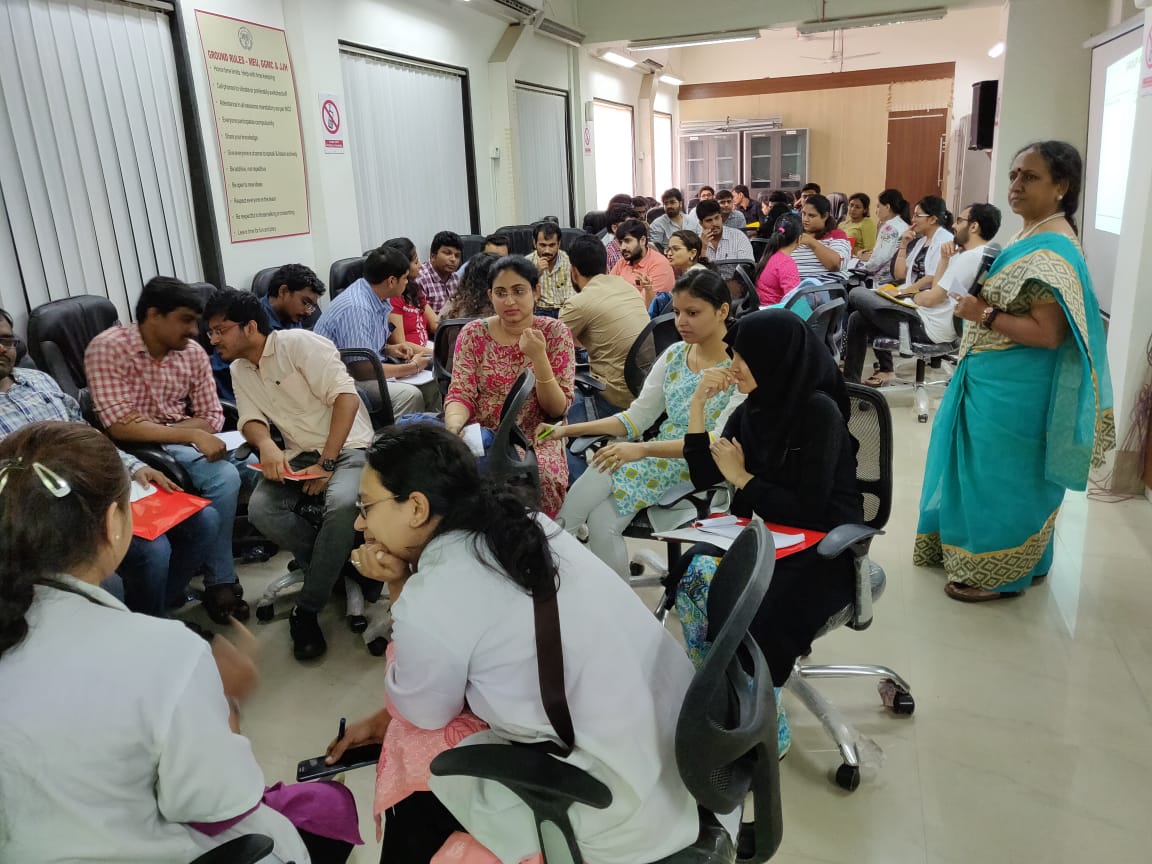
And even within that group, we have to ask: How much of it has truly stayed? If QMed disappeared tomorrow, only that smaller subset would even have the potential to carry something forward. And even there, retention is uncertain.
It forces a difficult shift in thinking:
We often measure reach. But what really matters is change.
2. The Problem of Forgetting (and Reverting)
We teach structured literature searching—Boolean operators, MeSH terms, careful query building. These are not intuitive skills. They decay quickly without use. So the real question is not whether someone learned it once—but whether they still use it. And use it right!
If QMed were gone:
- – How many would still construct a proper search strategy?
- – How many would persist under time pressure?
- – And how many would quietly return to what is easiest—typing a few words into Google?
This is not failure. It is human behaviour. Convenience wins. Which raises an uncomfortable thought:
If a skill is not used regularly, was it ever truly learned?
3. Courses, Completion… and What Happens After
We have built eLearning courses that, in theory, can outlast us. But what happens in reality?
- Will people revisit them?
- Will institutions continue to use them?
- Will they become part of routine teaching?
Or will they become something many of us recognize—completed once, appreciated briefly, and then forgotten?
If learning does not translate into repeated use, it does not become practice.
And if it does not become practice, it does not survive the organisation that introduced it.
4. Would Anyone Actually Miss This?
This is the hardest question to sit with. If QMed disappeared tomorrow:
- People might remember us
- They might say kind things
- They might acknowledge the value
But would they feel the absence in their daily work? Would they pause and think, “I need to do this properly”? Or would they move on—because the system allows them to?
If better literature searching is seen as optional rather than essential, then its survival is fragile!!
What Would Remain?
That original question lingers: What would remain if we were gone? Would it be:
- Skills that are still practiced?
- Habits that continue quietly?
- Or just a general sense that “QMed was doing something important”?
If what remains is appreciation without application, then our work has not fully taken root. Perhaps that is the real challenge ahead—not just reaching more people, but ensuring that what we teach becomes part of how people think and work.
Because in the end, the measure is simple: If we were gone tomorrow, would better literature searching continue? Or would it disappear with us?
To be clear, QMed is NOT going anywhere. (At least – till we can last)
But asking this question helps us understand what truly lasts—and what still needs work.
And now – A Question for YOU – the reader
If you have learned “correct” literature searching with us—or anywhere—what would you do differently to make sure it stays?
- Would you use it more consciously in your daily work?
- Would you stress upon the importance of this to a colleague or student?
- Would you build it into your department’s routine?
Or would you, like most – under pressure – slip back into convenience?
Because in the end, sustainability is not something organisations achieve alone. It depends on what individuals choose to carry forward. So perhaps the real question is not just what QMed would leave behind.
It is this: – What will you take with you—and keep using—even if we are no longer here?
If you DO care – please respond to this super quick survey
QMed #DoesItStick #MedicalEducation #EvidenceBasedMedicine #ResearchSkills #HealthcareIndia #ClinicalPractice #LearningThatLasts #KnowledgeInPractice #MedEd