
QMed turns eighteen on December 19, 2025.
– The journey still feels like a beginning—though not a fresh one.
– It feels like standing at the edge of a runway, ready and waiting to take off.
– What we need now is – for the health sector to truly want to master literature searching.
– To understand why it matters! Deeply!
Together we can help Indian research “fly high – like a bird in the sky – like an eagle that rides on the breeze!” (ABBA)
Where It All Began
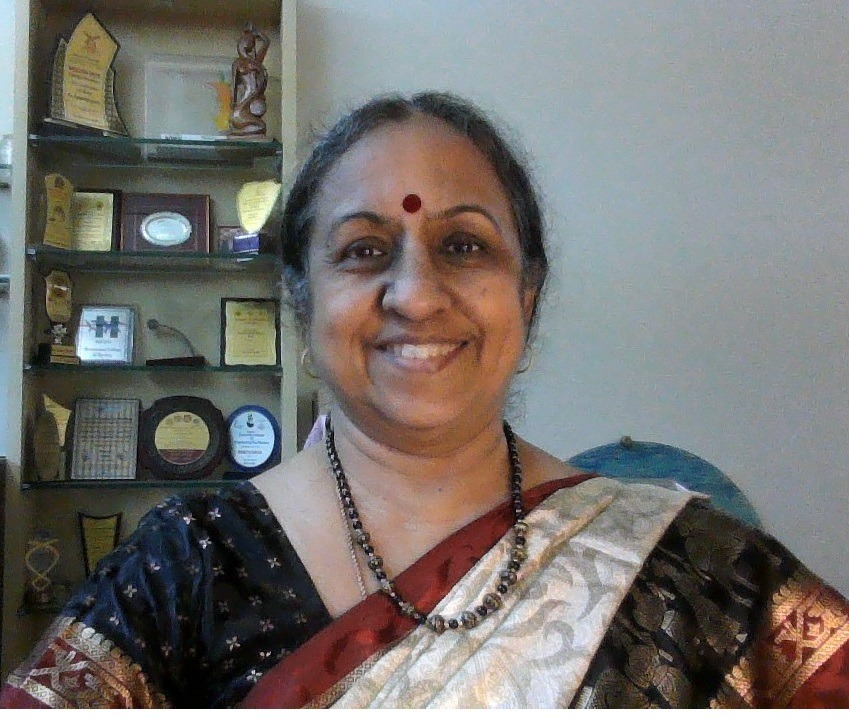
From 1999 onwards, I ran QMed as a Private Limited company offering a range of services—literature searching, sourcing full-text articles, library support, website content services, and more. But even then, my heart was firmly set on one thing: correct searching.
PubMed itself was still young, having been launched in 1996–97. In those early years, people were cautiously learning their way around it. But by the year 2000, a confident refrain had emerged: “We know PubMed. We know how to search.” That confidence, unfortunately, often did not match reality.
A Simple Thought That Changed Everything
In 2004, my then colleague Rajeev Surana would often say, “If you do a search once, you should not have to repeat it.” I would counter that every client’s search is different. Yet his thought stayed with me.
Around the same time, while browsing the US National Library of Medicine website, I noticed links to ready-made PubMed searches for specific topics. That was a moment of clarity. Why not create something similar—tailored for an Indian audience?
We created structured topics and subtopics with embedded PubMed search links, packaged on CDs so people wouldn’t need usernames or passwords. It became a tangible product, and technically, it worked very well.
When Innovation Meets Misunderstanding
Then came the turning point. Many users simply didn’t understand what the product actually was. One doctor even accused us of cheating him, saying, “This is only PubMed.” That, despite detailed explanations over the phone.
That experience forced a hard but important realisation: the problem wasn’t the product—it was the lack of awareness about what searching truly involves.
And that’s when I knew we needed to go beyond services and products. We needed education. We needed advocacy. And we needed a not-for-profit arm.
The Birth of QMed Knowledge Foundation
After many discussions, debates, and procedural hurdles, QMed Knowledge Foundation was finally established on 19 December 2007.
Eighteen years later, the irony remains striking. We still have to convince a large proportion of health professionals—students included—that learning to search the literature properly is essential for academics, research, AND for clinical practice.
Why This Matters Even More in the Age of AI
Today, with AI entering every aspect of healthcare and research, searching skills are no longer optional. To ask AI the right questions, you must understand how literature works—what to look for, where to look, and how to judge relevance and quality.
We have reached a significant numerator. But the denominator—the sheer number of health professionals in India—is vast.
We Need QMed Champions
To truly scale impact, we need champions who will:
- Reach out to this larger denominator – Speak and write about QMed and its mission
- Advocate with Commissions and Councils to integrate our courses into the curriculum
- Introduce us to people who matter
- And of course help us secure essential funding for the next three years.
Once these courses are embedded in curricula, and institutions contribute a modest subscription, this initiative can become truly self-sustaining.
What We Have Built Together: Milestones That Matter
Over eighteen years, QMed Knowledge Foundation has grown steadily—often quietly, always purposefully. These milestones are not just markers of time; they reflect trust earned, lives impacted, and a mission that refuses to dilute itself.
2007–2012: Laying the Foundation
- Trained nearly 1,300 participants, many of whom were being introduced to structured literature searching for the first time
- Represented India at the Annual Cochrane Colloquium, Madrid (Spain), placing our work on a global evidence-based healthcare platform
2013–2017: Expanding Reach and Recognition
- Developed sustainable fundraising approaches to support long-term capacity building
- Participated in the Cochrane Colloquium in India
- Invited as faculty for the international MECOR program
- Conducted workshops at multiple undergraduate medical conferences and trained over 100 postgraduate residents
- Recognition of our CEO as an Accredited Speaker by the Maharashtra Medical Council
- Conducted our first international workshop in Myanmar
- Our CEO received an International Award, reaffirming the relevance of this work beyond borders
2018–2022: Building for Scale
- Launched our first structured eLearning modules in collaboration with Mediknit, attracting several institutional subscribers
- Subsequently launched these courses on our own platform: www.qmedcourses.in, giving us full control over quality, updates, and reach
2023–Present: Validation and Momentum
- Received our first Education Grant from Pfizer, enabling hands-on workshops in 20 institutions across India
- Our Founder received the Dr. S. R. Ranganathan Lifetime Achievement Award (2024–25)—a deeply meaningful recognition from the LIS community
These achievements were possible because individuals and institutions believed that searching is a skill worth teaching. Imagine what we could achieve with many more such champions.
Looking Ahead – for a Great Takeoff!
After eighteen years, as I said – It feels like a beginning! A different beginning. We feel that we are at the end of a runway – waiting to soar up in the skies!!
While we continue to build new courses, update existing ones, and support learners at every stage—from basic research skills and case reports to complex systematic reviews and clinical guidelines, welcome to the new start!
If you believe that Indian healthcare must be grounded in the best available evidence, this is the moment to step forward. QMed now needs committed individuals and institutions who are willing to champion the cause of research literacy, structured searching, and informed decision-making.
Becoming a QMed Champion means helping us reach those who have not yet been reached—through advocacy, connections, funding support, and conversations that matter. It means shaping a future where every health professional knows how to find evidence, not just that evidence exists.
If this resonates with you, we would love to hear from you. Please write to us at info [at] qmed.ngo
and join us in building the next chapter of QMed’s journey.
QMedTurnsEighteen #EvidenceBasedHealthcare #LiteratureSearching #PubMedTraining #ResearchSkills #IndianHealthcare