


Learning literature searching and reference management works best when it is interactive and immediate. As QMed prepares to host two literature searching webinars (and reference management too!) – every month, recent live sessions have shown us how strongly learners respond to active elements such as real-time searches and immediate quizzes. These insights are shaping how we design QMed’s webinars going forward.
Why QMed Is Committing to Two Webinars Every Month
We would like all enrolled participants (across all QMed courses) to have opportunities to interact, learn live, and work through our Immediate Quizzes. These quizzes help learners grasp the most important foundations of literature searching—such as tags, Boolean operators, and MeSH—and, in time, similar core elements of reference management (for which we are still designing immediate quizzes).
Live interaction also helps us motivate participants to complete courses and aim for strong outcomes, rather than passively consuming content.
What Recent Live Sessions Taught Us About Learning Literature Searching
We recently did three events. (Yes – January has been rather full for us – happily so!):
- 14 January – QMed’s own webinar for enrolled participants
- 15 January – A webinar for faculty and research scholars, organised by the Maharashtra University of Health Sciences as part of their Advanced Research Methodology Workshop
- 16 January – Two lectures for undergraduate medical students, organised jointly by SMAK and Dr DY Patil Medical University School of Medicine
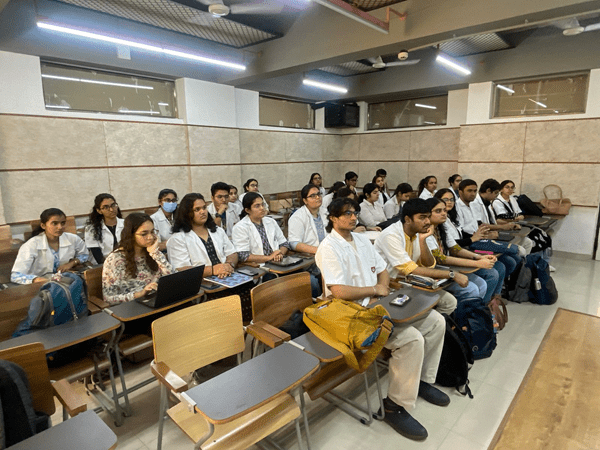
In all three sessions, we used Immediate Quizzes. In the latter two, we explicitly asked participants whether they preferred these quizzes during the session or at the end (or as a group activity). Except for a couple of responses, participants overwhelmingly felt that immediate quizzes were far more effective.
Why Immediate Quizzes Matter in Literature Searching Training
Immediate quizzes during sessions:
- Surface misunderstandings early
- Help learners test assumptions
- Reinforce search logic (keywords, concepts, databases)
We found this worked especially well when we first solved a few sample questions together and then moved to the quiz. This approach was even more effective than our earlier attempts, where quizzes followed teaching immediately without worked examples.
Designing Webinars for Serious Learners (Not Just Large Numbers)
Live webinars require real commitment—time, energy, and preparation. We take this seriously and continuously refine how we design and deliver these sessions. Our focus is on meaningful engagement rather than large attendance numbers.
We plan to run webinars regularly and hope to attract more learners who are genuinely interested in developing strong literature searching and reference management skills. Even when participation is small, we believe these sessions are an important part of QMed’s broader educational offering.
What to Expect from Future QMed Webinars
We plan to host two webinars every month—one focused on PubMed and one on Zotero. Our aim is to help participants become thoroughly comfortable with the essential features of both.
Over time, we hope to gradually move towards more advanced topics, including how best to apply literature searching and reference management skills while working with AI-based tools. Above all, we want these sessions to remain spaces for doubt-solving, discussion, and continued learning—not just coverage of basics.
Sustaining Thoughtful Learning
QMed continues to offer live sessions—often in institutions and frequently without honoraria—because strong literature searching and reference management skills are foundational to good research. At the same time, sustaining this work requires real support. Live teaching demands time, preparation, and ongoing effort, even when it is offered with easy access in mind.
Our goal is simple: to keep QMed’s work viable, consistent, and high-quality. If you value careful, rigorous training in literature searching and want this work to continue, you contribute directly to its sustainability
#LiteratureSearching #ReferenceManagement #LiveLearning #AcademicSkills #QMed