


Here is a story about how in recent lectures which were part of workshops, we used “Immediate quizzes” to reveal gaps in literature searching skills. And further stressed what we have known for years – that these skills need to be taught in the curriculum
In December, our Founder delivered two lectures as part of two workshops at a Dental College — one on Systematic Reviews & Meta-Analysis (SRMA) and the other a Research Methodology (RM) workshop. In both lectures, we introduced a small but significant change. Along with the lectures, we used “Immediate quizzes” to assess how well participants actually understood core literature searching concepts. Immediate quizzes – were quizzes set immediately after teaching them each concept.
The SRMA Workshop (23-Dec-2025) – The Immediate quiz and the gaps revealed
Participants were sent a short pre-reading document in advance. Just before the lecture our Founder explained the concepts in the document, checked that the participants understood and then gave them two quizzes:
- A quiz on Boolean operators (10 questions)
- A quiz on MeSH (5 questions)
Average scores:
- Boolean Operators: 5/10
- MeSH: 4/5
For the MeSH quiz, the questions were deliberately kept simple. Participants were shown screenshots of MeSH search results and asked whether a term should be searched using the [MeSH] tag or the [tiab] tag.
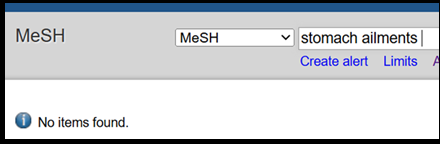
Mesh database search
In the example used, the correct answer was [tiab], as the term was not a MeSH heading. (They were also told, that in more advanced courses, we teach them how to find suitable Mesh terms for such terms)
An average score of 4 out of 5 suggests reasonable understanding — but ideally, this should have been a full score.
The Boolean operators result was more concerning. An average of 5 out of 10 is far from adequate. In systematic reviews, errors in Boolean logic can dramatically alter the evidence retrieved — sometimes eliminating critical studies altogether.
The Research Methodology (RM) Workshop (29-Dec- 2025) – The Immediate quiz and the gaps revealed
In the RM workshop, we took this approach a step further.
After teaching each of the must-know elements of literature searching — Tags, Boolean operators, and MeSH — we immediately conducted a short quiz.
Average scores:
- Tags: 6/10
- Boolean Operators: 5/10
- MeSH: 4/5
What stood out was that Tags and Boolean operators scored poorly despite the quizzes being conducted immediately after teaching.
During worked examples, participants followed along correctly. But when asked to apply the same concepts independently, many struggled — suggesting fragile understanding rather than true mastery.
Why this needs attention now
At QMed Knowledge Foundation, we believe that Tags, Boolean operators, and MeSH are foundational skills, not optional add-ons.
They must be taught, reinforced, and assessed at the undergraduate level across all health sciences disciplines.
When postgraduate learners — and even faculty — continue to make basic errors in literature searching, it raises serious concerns about the quality of research being produced. Our “Immediate quizzes” very clearly reveal these gaps in literature searching skills
This is where regulatory and academic bodies such as the Dental Council of India (DCI), National Medical Commission (NMC), and Indian Council of Medical Research (ICMR) have a critical role to play. Structured training and assessment of literature searching skills need formal recognition within curricula — not as one-off workshops, but as core competencies.
Immediate quizzes may seem like a small intervention. But they reveal a truth we can no longer afford to ignore.
And that is why QMed has created a free course “Information Resources & Literature Searching” – which if made mandatory for all UG students, can remove this problem. Making it mandatory includes making a score of 100% mandatory every few months. Only then can this be a full acquired competency. And then students need to know beyond the basics and learn from our other courses on PubMed and Reference Management tools too.

LiteratureSearching #ResearchTraining #SystematicReviews #MeSH #BooleanOperators #MedicalEducation #DentalEducation #ICMR #NMC #DCI #QMed