

We often think of the National Library of Medicine (NLM) as a place for current biomedical literature—PubMed searches, MeSH terms, and systematic reviews.
But quietly, and generously, NLM also opens a window into the past through its Digital Collections.
The Digital Collections of the NLM bring together digitised books, manuscripts, reports, images, films, and historical documents related to medicine, public health, and the life sciences. And the best part?
They are freely accessible to anyone, anywhere.
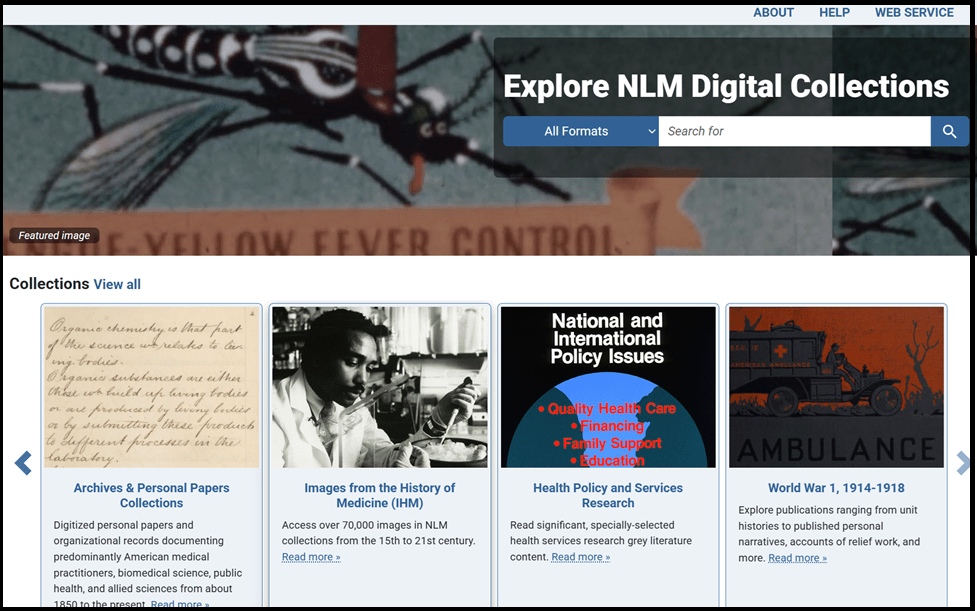
NLM Digital Collections website
Why these Collections of the NLM matter
Medicine does not exist in isolation from history. Many of today’s debates—on epidemics, ethics, medical education, health systems, and public trust—have played out before. The Digital Collections of the NLM allow us to see:
- How diseases were understood and described decades or even centuries ago
- How public health responses evolved during epidemics
- How medical education and training were shaped over time
These are not just archival curiosities. They provide context, perspective, and sometimes even humility.
What you will find inside the Digital Collections of the NLM
The collections include:
- Rare medical books and journals
- Public health reports and government documents
- Historical photographs and illustrations
- Films and multimedia related to medicine and health
Everything is carefully curated, searchable, and accompanied by rich metadata—making it useful not only for historians, but also for educators, students, and researchers. Learn more
Who should explore this?
- Medical and health sciences students, to understand the roots of modern practice
- Faculty, to enrich teaching with historical context
- Researchers, especially those working on reviews, ethics, policy, or health systems
- Librarians and information professionals, as a model of high-quality digital curation
A quiet lesson for the digital age
At a time when we rely heavily on AI-generated summaries and instant answers, the Digital Collections of the NLM remind us of something important:
knowledge has a lineage. Understanding where ideas come from strengthens how we use them today.
If you haven’t explored this resource yet, it is worth your time—not for speed, but for depth.
Additionally we at QMed have compiled a lot of useful resources in our Resources Library of QMedCourses. You could see a sample of the kind of resources available in our website page Resources for you
DigitalCollections #NationalLibraryOfMedicine #MedicalHistory #PublicHealth #HealthResearch #MedicalEducation #Libraries #OpenAccess